
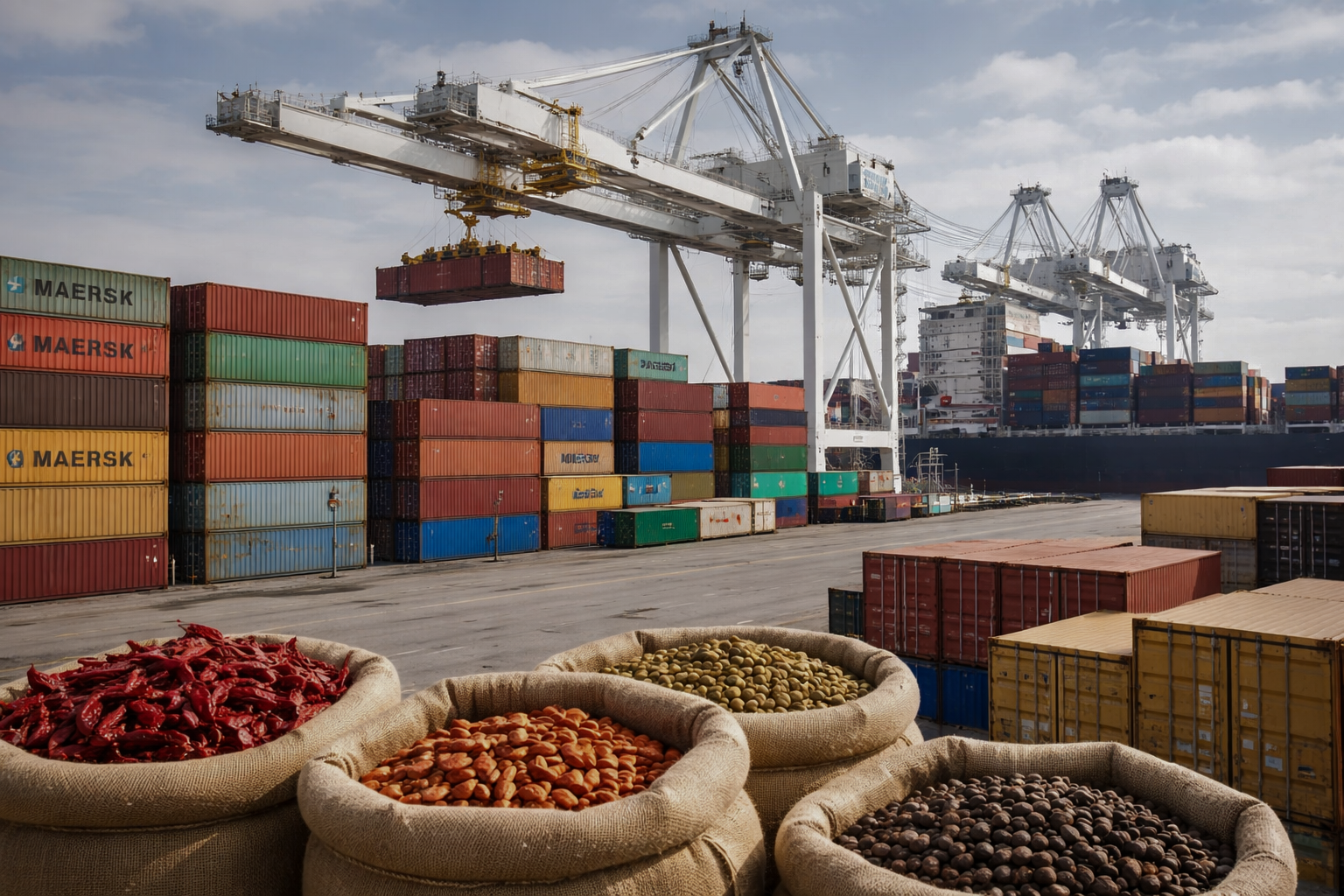
The recent U.S. Supreme Court ruling striking down broad tariffs imposed under the International Emergency Economic Powers Act (IEEPA) has introduced both relief and renewed uncertainty into global trade. For companies operating in the spice industry (where international sourcing is essential), tariff policy directly affects landed costs, supplier negotiations, and margin stability.
Although the Court invalidated certain sweeping tariffs, new measures have already been introduced under a different legal authority. For spice importers, this development should not be interpreted as a complete elimination of tariff exposure. Instead, it is a shift in structure, legal basis, and potential exposure.
This blog breaks down what changed, what did not change, and what sourcing and procurement teams should be watching closely.
What the Supreme Court Actually Ruled
The Court determined that the previous administration exceeded its authority by imposing broad global tariffs under IEEPA. These tariffs had been applied widely to imports from multiple countries.
However, shortly after the ruling, the administration announced a new 15% global tariff under Section 122 of the Trade Act of 1974. This means:
- The legal justification changed.
- Many tariffs remain in effect.
- Importers should not assume immediate cost relief.
For B2B buyers, the practical question is not whether tariffs were struck down, but whether your specific products are affected under the new structure.
Why Tariffs Matter in the Spice Industry
The U.S. is heavily dependent on imported spices. According to the U.S. Department of Agriculture (USDA) and International Trade Centre (ITC) trade data:
- The U.S. imports over 95% of its spice consumption.
- India accounts for approximately 25–30% of global spice exports.
- Vietnam is a leading exporter of black pepper.
- Indonesia is a major supplier of nutmeg and cloves.
- China is a key exporter of garlic and certain dehydrated ingredients.
Because most spices are sourced internationally, even a 10–15% tariff can significantly affect:
- Landed cost per metric ton
- Contract pricing agreements
- Distributor margins
- Long-term supply agreements
What Has Changed (and What Has Not)
1. Legal Uncertainty Has Increased
Although one set of tariffs was struck down, the rapid introduction of new tariffs under a different legal authority means uncertainty remains high.
Market reaction indicators:
- Increased volatility in commodity markets.
- Increased investment in traditionally stable assets such as gold.
- Ongoing trade policy adjustments are expected in the coming weeks.
For procurement teams, volatility creates pricing unpredictability rather than immediate savings.
2. Refund Questions Remain Unclear
Some importers are seeking refunds for tariffs previously paid under the invalidated authority. However, it is uncertain whether refunds will be granted or how quickly such claims will be processed.
This creates accounting and cash flow planning considerations for companies that imported large volumes during the tariff period.
3. The 15% Tariff Still Impacts Imports
The newly announced 15% tariff under Section 122 continues to put upward pressure on import costs. Depending on product classification (HTS code), some items may qualify for exemptions, but this must be verified on a case-by-case basis.
Spice importers should review:
- Harmonized Tariff Schedule (HTS) codes
- Country-of-origin exposure
- Existing supplier contracts
Practical Implications for Spice Sourcing
Cost Planning
With a 15% tariff in place, sourcing strategies may need adjustment. Companies may consider:
- Diversifying origin countries to mitigate risk.
- Renegotiating supplier terms.
- Increasing inventory buffers to hedge against sudden policy changes.
Supplier Diversification
Heavy reliance on one region (for example, India for cumin or Vietnam for pepper) increases exposure to both geopolitical and tariff-related risk.
Diversification does not eliminate tariffs but can improve negotiation leverage and supply continuity.
Contract Structure
Long-term fixed pricing agreements may require tariff adjustment clauses. Procurement professionals should ensure that contracts clearly define:
- Responsibility for tariff cost increases
- Force majeure conditions
- Adjustment triggers tied to regulatory change
Communication with Customers
B2B buyers expect transparency. Explaining cost drivers (such as tariff policy changes) strengthens credibility and trust.
Understanding the Bigger Picture: Trade Flows and Risk
The global spice trade is interconnected with:
- Agricultural cycles (monsoon patterns in India)
- Currency exchange rates (USD strength affects import cost)
- Freight rates and port congestion
- Regulatory changes (tariffs, food safety inspections)
Tariffs are one variable among many, but they are a controllable policy variable that can shift rapidly.
For context:
- The global spice market value is estimated at over $20 billion annually.
- U.S. imports represent a significant share of global trade volume.
- Black pepper prices alone can fluctuate 10–20% within a year due to supply conditions and policy changes.
When layered with a 15% tariff, price volatility compounds.
Key Takeaways
- The Supreme Court struck down certain tariffs, but new 15% tariffs are now in effect.
- Most spices consumed in the U.S. are imported, making the industry highly exposed to tariff changes.
- Legal uncertainty increases volatility even if policy shifts are temporary.
- Procurement teams should review HTS codes and country-of-origin exposure immediately.
- Supplier diversification and contract flexibility are critical risk-management tools.
- Transparent communication with B2B customers strengthens long-term partnerships.
Final Thoughts
For the spice industry, the recent tariff ruling should not be viewed merely as a policy reversal, but rather as a structural shift in the trade environment. Companies that monitor policy developments closely and adapt sourcing strategies proactively will be better positioned to manage cost volatility.
In times of regulatory change, stability becomes a competitive advantage. Informed sourcing decisions today protect supply continuity tomorrow.
References
BBC News. (2026, February). US Supreme Court ruling on tariffs raises questions over trade powers.
Business Insider. (2026). Prices are unlikely to fall despite the Supreme Court striking down Trump’s tariffs, Goldman Sachs says.
Reuters. (2026). Trump says U.S. global tariff rate will rise from 10% to 15%.
Reuters. (2026). Gold climbs to three-week high as U.S. tariff ruling stokes uncertainty.
United States Department of Agriculture (USDA). (2025). U.S. spice import data.
International Trade Centre (ITC). (2025). Trade Map statistics on global spice exports.