
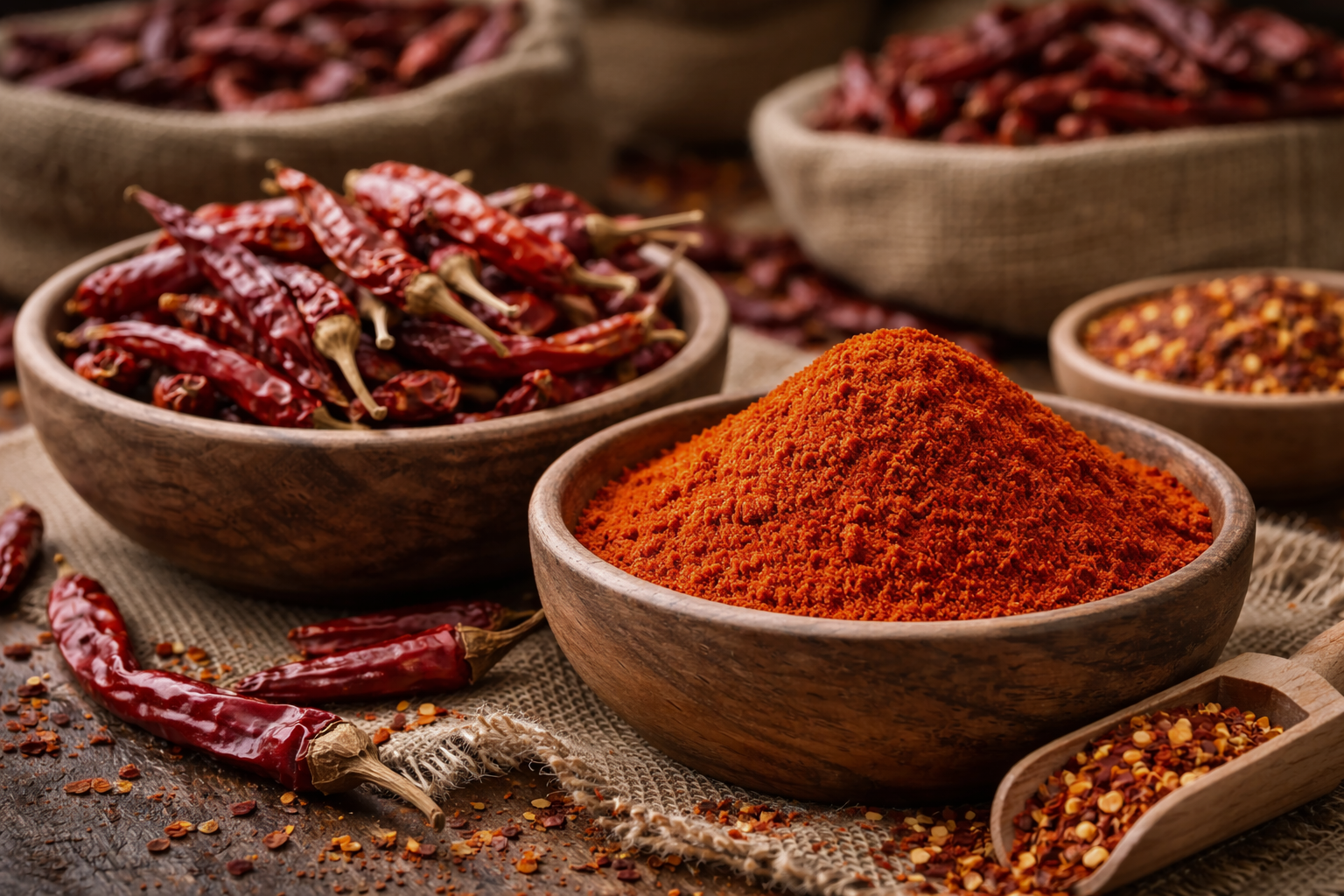
A Quick Look at the Current Market
Chili and paprika markets are showing signs of continued tightness, driven by supply constraints in key producing regions and steady demand from food manufacturers.
For ingredient buyers, this environment is creating additional pressure around pricing, availability, and sourcing decisions. Understanding these dynamics is important for planning purchases and managing supply risk in the coming months.
What’s Behind the Supply Challenges in Major Producing Regions
Chili and paprika production is concentrated in a few major regions, including India, China, and parts of Europe such as Spain.
In recent cycles, these regions have experienced challenges such as:
- weather variability affecting yields
- changes in planted acreage
- fluctuations in crop quality
These factors have contributed to tighter supply availability in the market, particularly for specific grades and specifications.
Demand Remains Strong Across Food Applications
At the same time, demand for chili and paprika remains consistent across multiple segments of the food industry.
These spices are widely used in:
- seasoning blends
- processed foods
- sauces and ready meals
- meat and snack applications
Because of their role in providing both flavor and color, demand tends to remain stable even when supply conditions fluctuate.
Tighter Supply Is Starting to Show in Prices
With supply tightening and demand holding steady, market conditions are supporting higher price levels.
In this type of environment, buyers may experience:
- upward pressure on pricing
- limited availability for certain specifications
- variability in color or heat levels depending on origin
This makes it more important to plan sourcing decisions carefully and remain flexible when evaluating options.
How Buyers Are Adjusting to These Conditions
For procurement teams, current market conditions require a more strategic approach to sourcing chili and paprika.
Key considerations include:
- planning purchases earlier to secure supply
- evaluating alternative origins or specifications
- maintaining flexibility in formulations when possible
- working with suppliers that can provide consistent quality
These actions can help reduce exposure to volatility and ensure continuity in production.
Looking at the Bigger Picture
While market tightness can fluctuate over time, the current environment highlights the importance of supply visibility and strong supplier relationships.
Buyers that actively monitor market conditions and adapt their sourcing strategies are better positioned to manage both cost and availability challenges.
A Few Things to Keep in Mind
- Chili and paprika markets are experiencing supply tightness in key producing regions
- Demand remains steady across multiple food manufacturing segments
- Market conditions are supporting higher prices and reduced availability
- Buyers may face variability in quality and specifications
- Strategic sourcing and early planning can help manage risk
Chili and paprika continue to be essential ingredients in food manufacturing, making their availability and pricing critical for many producers.
In a tighter market environment, understanding supply dynamics and working with reliable suppliers can help maintain consistency and reduce operational risk.