
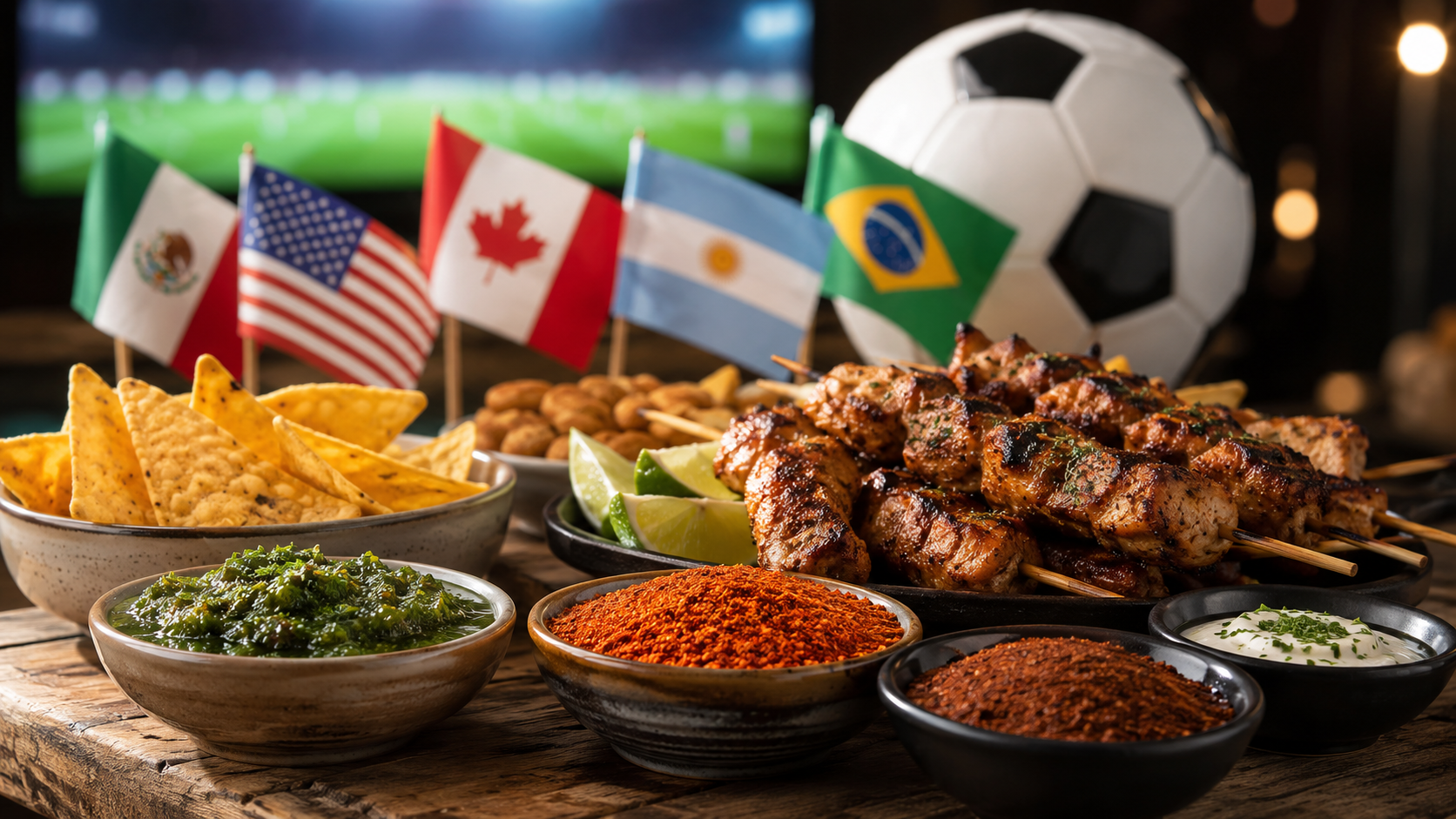
Global sporting events are not only about the matches. They also create moments where people gather, share food, discover new cultures, and try flavors they may not usually choose.
That is what makes events like the FIFA World Cup so interesting for the food industry. For a few weeks, countries, cuisines, flags, traditions, and national pride are part of everyday conversations. People watch games at home, in restaurants, at bars, in stadiums, and at fan festivals. Food becomes part of that experience.
The 2026 FIFA World Cup is a strong example. Hosted across Canada, Mexico, and the United States, it is the largest edition of the tournament so far, with 48 teams and 104 matches. That scale gives food brands, restaurants, snack companies, and manufacturers more opportunities to connect global flavors with real consumer moments.
A match can introduce people to a team. A snack can introduce them to a flavor.
Why sports and food are so closely connected
Sports bring people together, and food usually follows.
A game is often watched with friends, family, coworkers, or other fans. That naturally creates occasions for shared foods: chips, dips, wings, grilled proteins, sandwiches, tacos, fries, nuts, sauces, and drinks. These are the types of foods that work well in groups and are easy to serve during a match.
Because of this, sports events can influence what flavors people notice. A consumer may not be actively searching for a new seasoning profile, but during a tournament, country-inspired flavors suddenly feel more relevant. A chimichurri-style snack, a chili-lime seasoning, a garlic sauce flavor, or a barbecue rub can feel connected to the occasion.
The event gives the flavor a story.
That story matters because consumers are often more open to trying something new when there is a clear reason behind it. A limited-time flavor tied to a country, team, or global event feels timely. It can create curiosity, encourage trial, and make the product easier to talk about.
The World Cup puts national flavors in front of a global audience
The FIFA World Cup is especially relevant for flavor trends because it brings many countries into one event. Each team carries its own cultural identity, and food is one of the easiest ways for people to connect with that identity.
In 2026, this connection is already visible in the snack category. Major food brands have created World Cup-inspired products and limited-time flavors based on different countries and regional cuisines. Examples include flavors inspired by Argentinian chimichurri, Brazilian garlic sauce, Mexican tacos, Canadian maple, Portuguese chorizo and onion, and French onion soup.
These examples show how global flavors can move into familiar formats. A consumer may not prepare an Argentinian grilled meal at home, but they may try a chimichurri-inspired chip. They may not know a traditional Brazilian garlic sauce, but a garlic-forward snack flavor can make that profile more approachable.
For flavor development, this is an important point. The goal is not always to recreate a full dish exactly. Often, the goal is to capture the most recognizable parts of that dish or cuisine.
For chimichurri, that might mean herbs, garlic, acidity, and a grilled-food association.
For chili-lime, it might mean citrus, mild heat, salt, and brightness.
For barbecue, it might mean smoke, sweetness, paprika, pepper, and roasted notes.
For garlic sauce, it might mean creaminess, savory depth, and a strong aromatic profile.
When these elements are translated well, the flavor feels familiar enough to try but still interesting enough to stand out.
Fan events help make global flavors feel more familiar
The 2026 World Cup is also built around fan experiences in host cities across North America. These events often include match screenings, music, local culture, and food. That matters because food discovery does not only happen in retail. It also happens in social spaces.
A fan may attend a public screening to watch a match and end up trying food from a local vendor. Someone may go to a restaurant because of a game and order a dish connected to one of the teams playing. A group may plan a watch party and choose snacks based on the countries in the match.
These moments can make global flavors feel easier to understand.
For example, chimichurri is not just an herb sauce when Argentina is playing. It becomes part of the story of grilled meats, match-day food, and national identity. Chili-lime is not just a seasoning. It connects to Mexican snacks, freshness, heat, and casual sharing. A garlic-forward sauce can become associated with fries, chicken, seafood, or street-food-style eating.
This is how sporting events can help move flavors from niche to familiar. They give consumers a simple entry point.
Why sauces, dips, and seasonings work so well during sports events
Some formats are especially strong during global sporting events. Sauces, dips, marinades, rubs, and seasoning blends are among the most flexible.
They work because they can bring a global flavor to a familiar food. A classic snack, protein, or side dish can feel new with the right seasoning or sauce. This makes global flavor exploration feel less risky for consumers.
A few examples:
Chimichurri can work on grilled proteins, roasted vegetables, fries, snack mixes, or chips.
Chili-lime can work on nuts, chips, fruit snacks, popcorn, seafood, and prepared foods.
Garlic sauce profiles can work in dips, chicken, fries, sandwiches, dressings, and savory snacks.
Barbecue rubs can work on meats, jerky, roasted nuts, chips, and plant-based proteins.
Harissa, peri-peri, gochujang, and curry-style profiles can bring heat and depth to sauces, wings, marinades, and snack seasonings.
This flexibility is one reason global sporting events are useful for product development. A flavor concept can start with one country or cuisine, but it can often be adapted across many applications.
Sweet heat, acidity, and bold savory flavors fit the moment
Many current flavor trends also fit naturally into sports-related eating occasions.
Sweet heat continues to be popular because it feels bold but approachable. Flavors such as hot honey, mango chili, pineapple jalapeño, maple spice, guava habanero, or chili-lime combine excitement with balance. They bring heat, but not just heat. They also bring sweetness, fruitiness, or acidity.
Tangy flavors are also important. Vinegar, citrus, pickle, fermented notes, and sour profiles can make snacks feel brighter and more craveable. These flavors work especially well with rich foods such as fried snacks, cheese, meats, creamy dips, and grilled products.
Savory and smoky flavors also have a strong role in sports occasions. Smoke, roasted garlic, onion, paprika, pepper, tomato, grilled meat notes, and toasted spices can make a product feel more satisfying and more connected to traditional game-day foods.
The most successful flavor profiles are usually layered. They are not only spicy, salty, or smoky. They have contrast.
Heat needs acidity.
Smoke often works better with sweetness.
Herbs need garlic or citrus to feel complete.
Creamy profiles need spice or tang to avoid feeling heavy.
This balance is what makes a flavor memorable.
How global events can speed up flavor adoption
A sporting event does not create a flavor trend by itself. But it can help a trend grow faster.
If consumers are already interested in global sauces, regional cuisines, bold snacks, spicy flavors, and limited-time products, an event like the World Cup gives those trends a platform. It gives brands a reason to launch new flavors, restaurants a reason to create special menus, and consumers a reason to try something different.
It also makes flavor exploration feel more social. People may try a new snack because someone brought it to a watch party. They may order a dish because it is connected to the country playing that day. They may see a limited-time flavor online and share it because it connects to the tournament.
That kind of visibility can help certain flavors move beyond the event.
Some products may stay seasonal. Others may reveal which profiles have longer-term potential.
Why this matters for food manufacturers
For food manufacturers, sports-inspired flavors can be more than a seasonal idea. They can be a practical way to test what consumers are curious about.
A global event like the World Cup gives people a reason to try flavors from different countries. That can make certain profiles feel more familiar, even if they were not part of someone’s everyday eating habits before. A chimichurri-style seasoning, a chili-lime snack, a garlic sauce flavor, or a smoky barbecue rub can all feel easier to understand when they are connected to a team, a match, or a country.
For manufacturers, the opportunity is in turning that interest into products that actually work at scale.
A flavor idea may sound exciting, but it still needs to fit the product. A seasoning for chips needs to coat evenly. A rub for grilled protein needs to hold up during cooking. A sauce-inspired blend needs the right balance of salt, acid, heat, herbs, and aromatics. Even small details such as particle size, color, moisture, and ingredient density can affect how the final product looks, tastes, and performs in production.
This is why global flavor trends are not only about creativity. They are also about execution.
The strongest concepts are usually the ones that connect a clear flavor story with a format consumers already understand. For example, Argentinian chimichurri can work as a grilled protein seasoning, a snack dusting, or a marinade base. Mexican chili-lime can fit chips, nuts, fruit snacks, and prepared foods. Garlic-forward profiles can move across dips, sauces, fries, chicken, and savory snacks.
When the flavor is flexible, manufacturers have more room to adapt it across product lines, retail programs, foodservice menus, or private label opportunities.
Events like the World Cup can also be a useful testing ground. They show which global flavors catch attention, which ones feel approachable, and which ones may have potential beyond the event itself.
What to watch after the tournament
The impact of a global sporting event does not always end with the final match.
Some limited-time flavors disappear once the event is over. Others help introduce consumers to ingredients, sauces, and cuisines that continue to grow. A tournament can make people more familiar with flavors they may later recognize in restaurants, snacks, frozen meals, sauces, or retail products.
For 2026 and beyond, several flavor directions are worth watching:
Global street-food-inspired seasonings
Country-specific sauces and marinades
Sweet heat combinations
Chili and citrus profiles
Smoky and grilled flavors
Garlic-forward savory blends
Tangy, pickled, and fermented notes
Flexible seasonings that work across snacks, proteins, and prepared foods
The strongest opportunities will likely come from flavors that feel both specific and easy to understand. Consumers respond to a story, but they also need a clear taste expectation.
A name like “chimichurri” works because it is tied to a real culinary tradition and has a recognizable flavor profile. “Chili-lime” works because people immediately understand the balance of heat and citrus. “Garlic sauce” works because it is simple, familiar, and versatile.
Final thoughts
Global sporting events bring attention to countries, cultures, and shared experiences. Food naturally becomes part of that moment.
For the food industry, this creates an opportunity to explore flavors that feel timely, social, and connected to something larger than the product itself. The 2026 World Cup shows how national cuisines, regional sauces, snack seasonings, and bold flavor combinations can become part of the way people experience a global event.
The most successful ideas are not only creative. They are clear, flexible, and practical.
A good flavor can celebrate a country, fit a familiar product, perform in production, and still feel exciting to the consumer.
Sport brings people together. Flavor gives them something to share.