
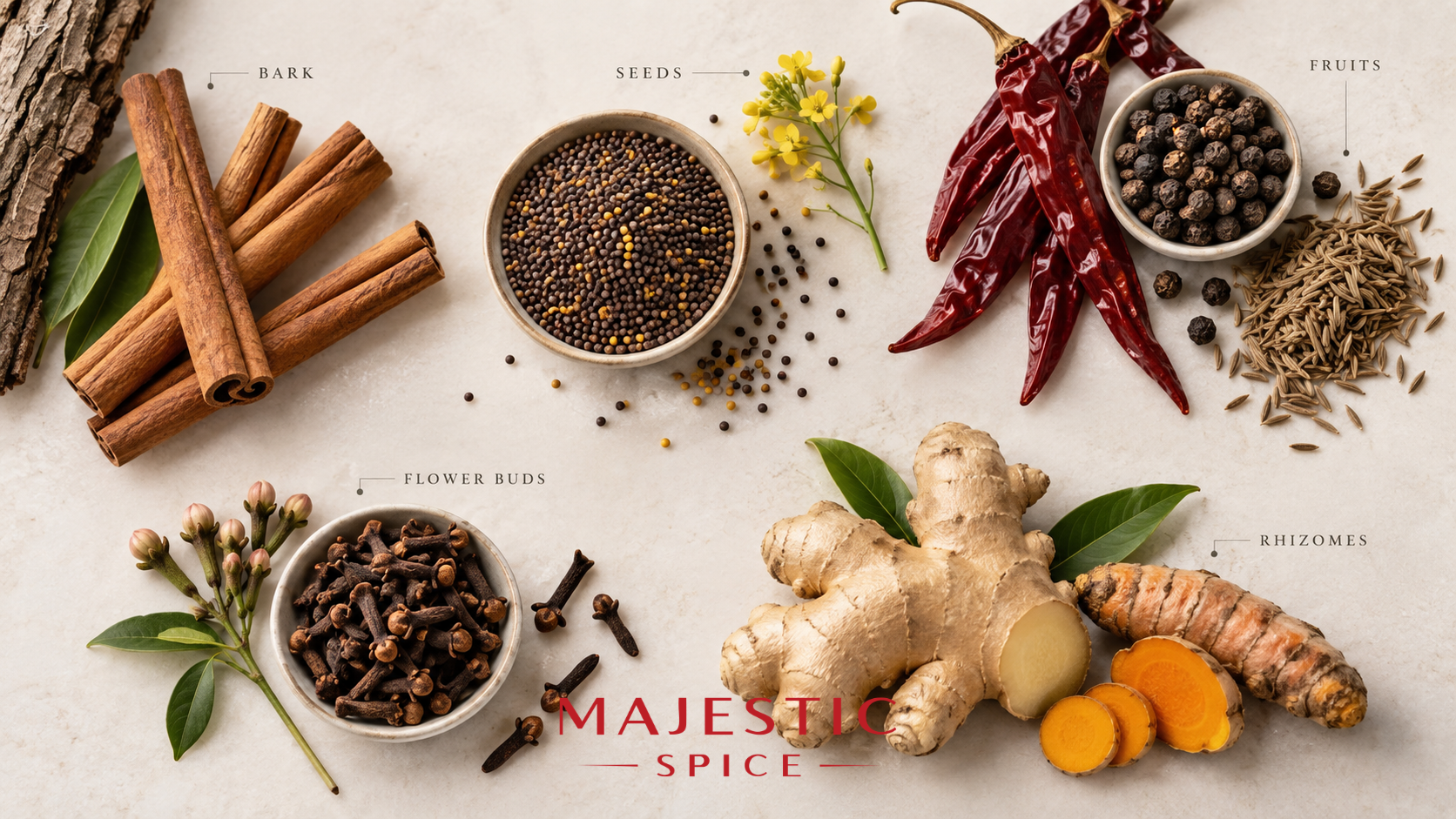
When we think about spices, we usually think about flavor, aroma, color, or heat. But the spices in our kitchens and food products actually come from very different parts of a plant.
With fall and holiday product development underway, ingredients like cinnamon, clove, ginger, and chile are especially common in seasonal formulations. Yet even though we group them all together as spices, botanically they have very little in common.
Some come from bark. Others are seeds, fruits, flower buds, or underground stems. Where a spice comes from affects how it is harvested, processed, stored, and used.
Bark: Cinnamon
Cinnamon comes from the inner bark of trees in the Cinnamomum genus.
After harvest, the outer bark is removed and the inner bark is dried. During drying, it naturally curls into the cinnamon sticks, or quills, we recognize. It can then be sold whole or ground into powder.
Cinnamon brings a warm, sweet aroma to bakery products, beverages, desserts, sauces, and seasoning blends.
Seeds: Mustard
Mustard comes from the seeds of plants in the Brassica and Sinapis genera.
Different mustard varieties can range from mild and nutty to sharp and pungent. When mustard is ground and mixed with moisture, chemical reactions release the compounds responsible for its familiar sharp flavor.
Mustard is commonly used in dry seasonings, sauces, marinades, dressings, and prepared foods.
Fruits: Chile Peppers, Black Pepper, and Cumin
Several spices that we rarely think of as fruits actually are.
Chile peppers are fruits. Depending on the variety and how they are processed, they can bring heat, color, sweetness, smokiness, fruitiness, or a combination of these characteristics.
Black pepper comes from the fruit of the Piper nigrum plant. Harvest timing and processing determine whether the final product becomes black, white, or green pepper.
Cumin is usually called a seed in culinary use, but botanically, the part used as a spice is the plant’s dried fruit. Its warm, earthy flavor is common in spice blends and savory products around the world.
Flower Buds: Clove
Cloves are dried flower buds from the clove tree.
The buds are harvested before the flowers open and then dried. This process develops the strong aroma and warm, slightly sweet flavor associated with clove.
Clove is particularly concentrated, so a small amount can add significant flavor. It is commonly found in bakery products, beverages, spice blends, sauces, and seasonal formulations.
Rhizomes: Ginger and Turmeric
Ginger and turmeric come from rhizomes, which are underground stems rather than roots.
The rhizome is the part of the plant that stores nutrients and produces the flavors, aromas, and pigments we associate with these spices.
Ginger has a warm, citrusy heat and is used in baked goods, beverages, sauces, marinades, and seasoning blends.
Turmeric has an earthy flavor and strong golden color. It is commonly used in seasonings, sauces, prepared foods, and other savory products.
What Spice Anatomy Tells Us
Knowing which part of the plant a spice comes from can tell us quite a bit about the ingredient.
Bark, seeds, fruits, flower buds, and rhizomes have different structures and naturally contain different levels of oils, pigments, fibers, and aromatic compounds. These differences affect how an ingredient is harvested, dried, milled, stored, and ultimately used in a food product.
For food manufacturers and product developers, that can matter when selecting ingredients for a specific flavor, color, texture, or application.
A seasoning blend may bring together ingredients from completely different parts of a plant. Knowing a little about their anatomy helps explain why each spice looks, tastes, and performs the way it does.