
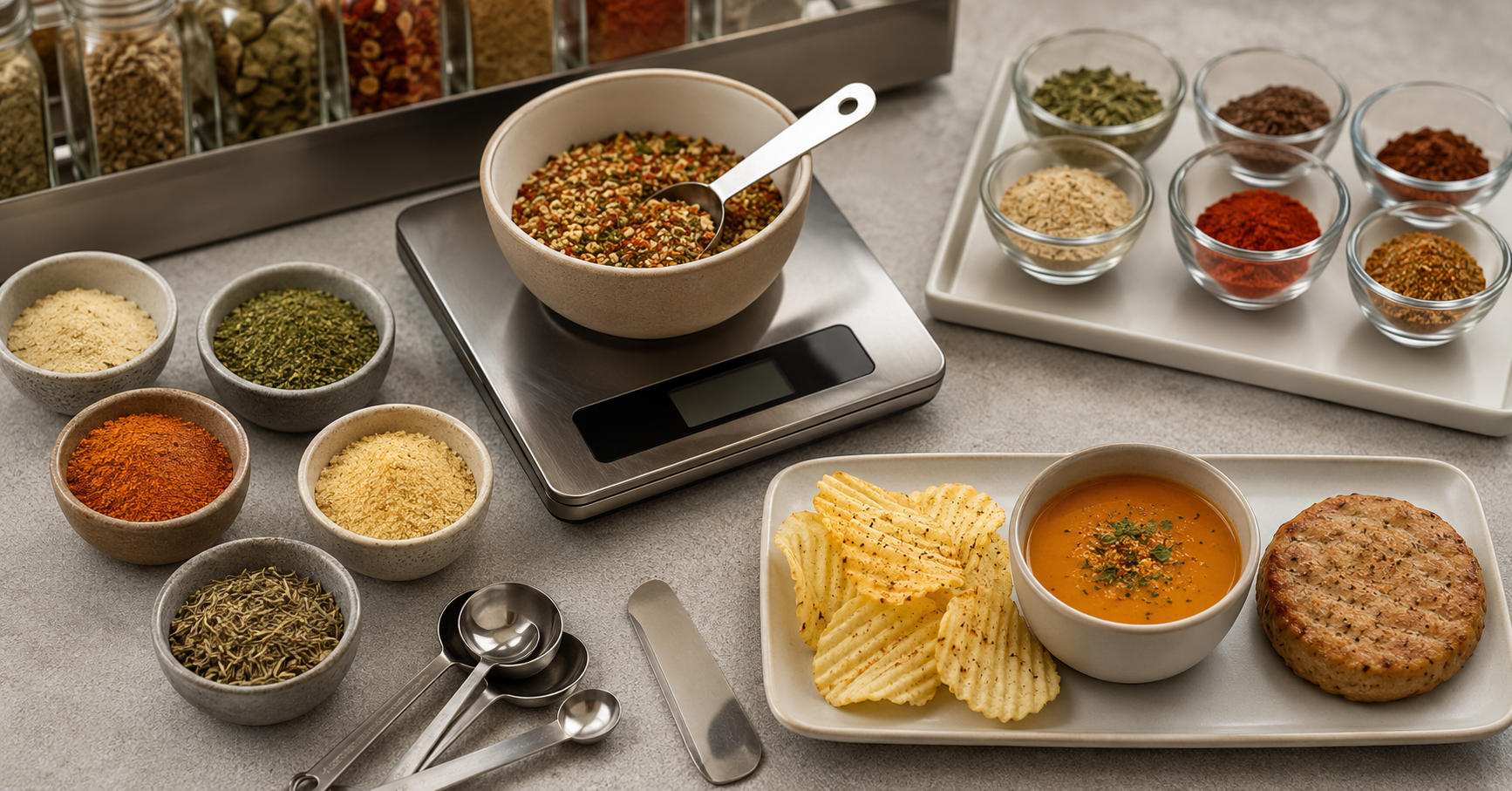
Holiday food demand follows a familiar rhythm every year. Pumpkin spice appears before the weather even turns cold. Peppermint and gingerbread flavors take over by late fall. Savory blends built around sage, rosemary, and clove show up in stuffing mixes, roasted nut coatings, and holiday snack lines. None of this is a surprise to anyone in food manufacturing. What often gets underestimated is how much lead time these seasonal flavors actually require before they can reach a shelf or a foodservice menu.
For manufacturers, private label brands, and foodservice companies, the holiday season is less about reacting to demand and more about whether seasoning sourcing decisions were made early enough to support it.
Why Seasonal Flavors Are a Planning Problem, Not Just a Flavor Problem
Seasonal seasoning blends are not simple swaps. A pumpkin spice blend depends on cinnamon, nutmeg, clove, and ginger, ingredients that come from different origin countries with different harvest calendars. A savory holiday blend might rely on sage or rosemary, which can be affected by weather conditions during growing season. When any single component runs into a supply delay, it can hold up an entire finished blend, even if the rest of the formulation is ready.
This creates a timing problem that is easy to underestimate. A blend that will appear on shelves in November often needs to be sourced, tested, and locked in by summer. Manufacturers who wait until early fall to finalize seasonal flavors are working with a much narrower margin for error.
The Production Side of Seasonal Demand
Holiday seasoning demand does not arrive gradually. It tends to spike sharply over a compressed window, often just six to ten weeks. This creates real pressure on production planning:
- Batch scheduling. Seasonal SKUs often run alongside core, year-round products, which means production lines need a clear plan for when seasonal runs happen and how long they last.
- Ingredient inventory. Holding enough seasoning inventory to cover a short, intense demand window without overordering perishable spice components requires accurate forecasting, not guesswork.
- Packaging changeovers. Seasonal products frequently use different packaging, labeling, or portion sizes than year-round items, which adds changeover time that needs to be built into the schedule.
- Documentation timing. Updated allergen statements, nutritional panels, and specification sheets for seasonal formulations need to be finalized before production starts, not adjusted afterward.
None of these are unusual challenges on their own. They become a problem only when seasoning decisions are made too close to the production date.
What This Means for Private Label and R&D Teams
Private label brands often use the holiday season as a window to introduce new flavors or refresh existing ones. This adds another layer of timing pressure, since new formulations need sampling, testing, and approval cycles before they can move into production.
R&D teams working on seasonal products should be building in time for:
- Sample requests and formulation adjustments with their seasoning supplier
- Shelf-life and stability testing for the finished product, not just the raw blend
- Sensory testing across different batch sizes to confirm the flavor holds up at scale
- Confirmation of ingredient origin and sourcing, in case last-minute substitutions become necessary
Rushing any of these steps to meet a shelf date increases the risk of inconsistent flavor or a delayed launch.
Questions Buyers Should Ask Before Holiday Season Begins
Procurement teams working with a seasoning supplier on holiday programs should be asking:
- When does the supplier need a committed order to guarantee the blend is ready for a fall or holiday launch?
- Are any of the core spices in this blend subject to seasonal harvest timing or known origin-country weather risk?
- What happens if a key ingredient runs short close to the production date? Is there an approved substitute already tested?
- Can the supplier confirm consistent flavor and color across multiple production batches, not just the initial sample?
- Is packaging and labeling documentation finalized early enough to avoid delaying the production schedule?
Asking these questions in the summer, rather than in September or October, gives both the manufacturer and the supplier room to solve problems before they affect a launch date.
Planning Is the Real Advantage
Holiday demand for seasonal flavors is one of the more predictable patterns in food manufacturing. The category, the timing, and the general flavor trends repeat year after year. The companies that handle this well are not the ones reacting fastest once the season starts. They are the ones who treated seasoning sourcing as an early planning decision rather than a late-stage detail.
Locking in seasonal blends, confirming ingredient availability, and finalizing documentation months ahead of the holiday window gives manufacturers room to manage the inevitable small disruptions without those disruptions turning into missed launch dates or inconsistent product.