
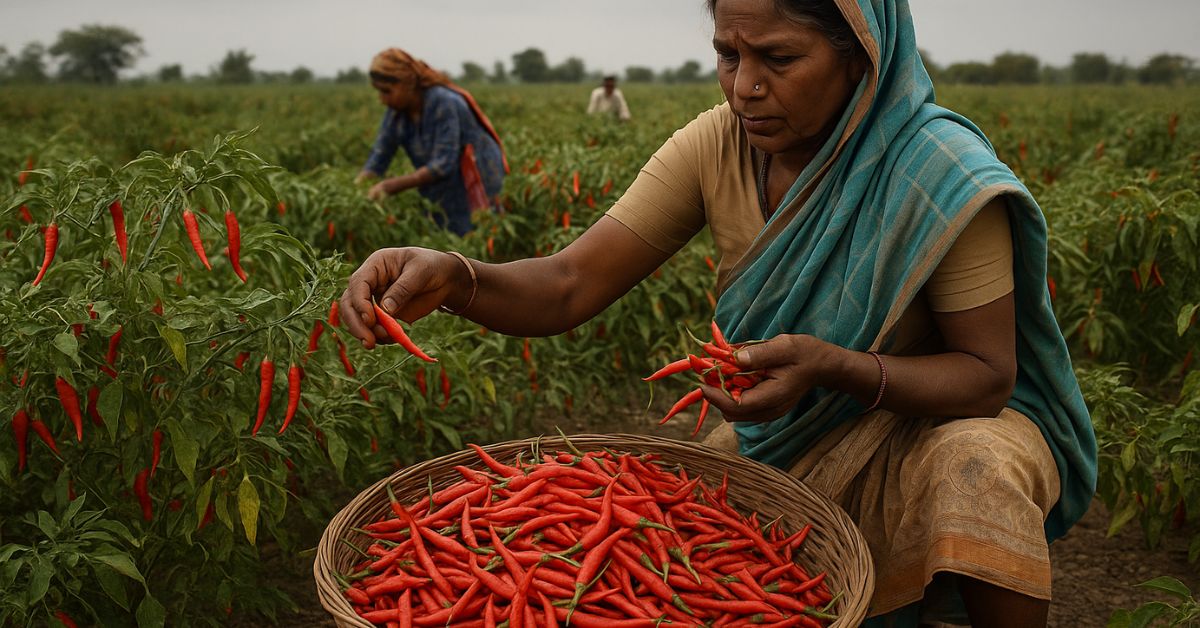
As of December 1st 2025, the chilli market is facing real pressure. A recent cyclone that hit key producing regions in India has pushed the new-season harvest back by several weeks, and the market is already reacting. With limited arrivals and reduced field activity, buyers are preparing for a tighter start to the 2025 season.
Where the Delay Is Happening
Reports from late November confirm that harvesting in affected parts of Gujarat and nearby growing areas has been interrupted. Heavy wind and rain have made it difficult for farmers to begin picking, and in some cases fields are still too wet to access without damaging the plants.
This is normally the period when early-season chillies begin flowing into local mandis. Instead, arrivals have slowed to a trickle. Farmers who planned to start picking after Diwali are now waiting for conditions to stabilize.
Impact on Supply Right Now
The chilli harvest delay in 2025 is already visible in the market:
- Arrivals remain lower than expected for this date
- Cold-storage stock is being used more quickly
- Buyers are competing for limited lots in better grades
- Processors and exporters are working with older crop while waiting for new material
While the full crop size won’t be known until the harvest resumes, the first signals point to a season that will open with less supply and more uncertainty.
What’s Happening With Prices
Prices for many red chilli varieties have risen since mid-November. With no steady flow of fresh produce, wholesale markets have adjusted upward. Exporters in particular are concerned about consistency in supply over the next month, since many forward contracts rely on fresh-season product.
Some markets that expected stabilizing prices after the October and early November fluctuations are now facing renewed pressure.
Quality Considerations Going Into the New Season
There is growing concern about how the cyclone and wet conditions may affect quality once harvesting starts. Excess moisture and delayed drying can impact:
- colour
- heat levels
- shelf stability
- foreign matter levels during early processing
Buyers who depend on consistent color and pungency may need to monitor first-arrival lots more closely this year.
Why This Matters for the 2025 Season
The chilli harvest delay is happening at the exact moment when many processors, exporters, and bulk buyers begin planning their early-year contracts. A late harvest means:
- Tighter raw material availability through December and possibly into January
- Greater reliance on carry-over stock from earlier months
- Risk of extended higher prices if early-season volume remains thin
With buyers already active and exporters preparing for January and February shipments, competition for available lots may remain strong until the harvest catches up.
What to Watch in the Coming Weeks
Several factors will determine how the market behaves through the rest of December:
- How quickly will fields dry enough for picking to resume
- Whether the weather remains stable or brings additional interruptions
- Actual yields during first pickings, especially in cyclone-affected areas
- The pace of arrivals at major mandis once harvesting restarts
- How cold-storage holders release remaining stock
If harvesting picks up normally by mid-December, supply pressure could ease slightly. If delays continue or early yields disappoint, the tightness may extend longer into early 2026.