
In ingredient sourcing, decisions are often made based on what is most visible: price, origin, and availability. These factors matter, but they rarely tell the full story.
Behind every spice or seasoning used in production, there are technical characteristics that directly influence how that ingredient performs once it reaches the production line. And yet, these details are often treated as secondary considerations, until inconsistencies begin to appear.
For buyers working in food manufacturing, overlooking these elements can lead to variations that are difficult and costly to correct later. Understanding them upfront is not just a technical exercise; it is a strategic advantage.
Not All Grind Sizes Behave the Same
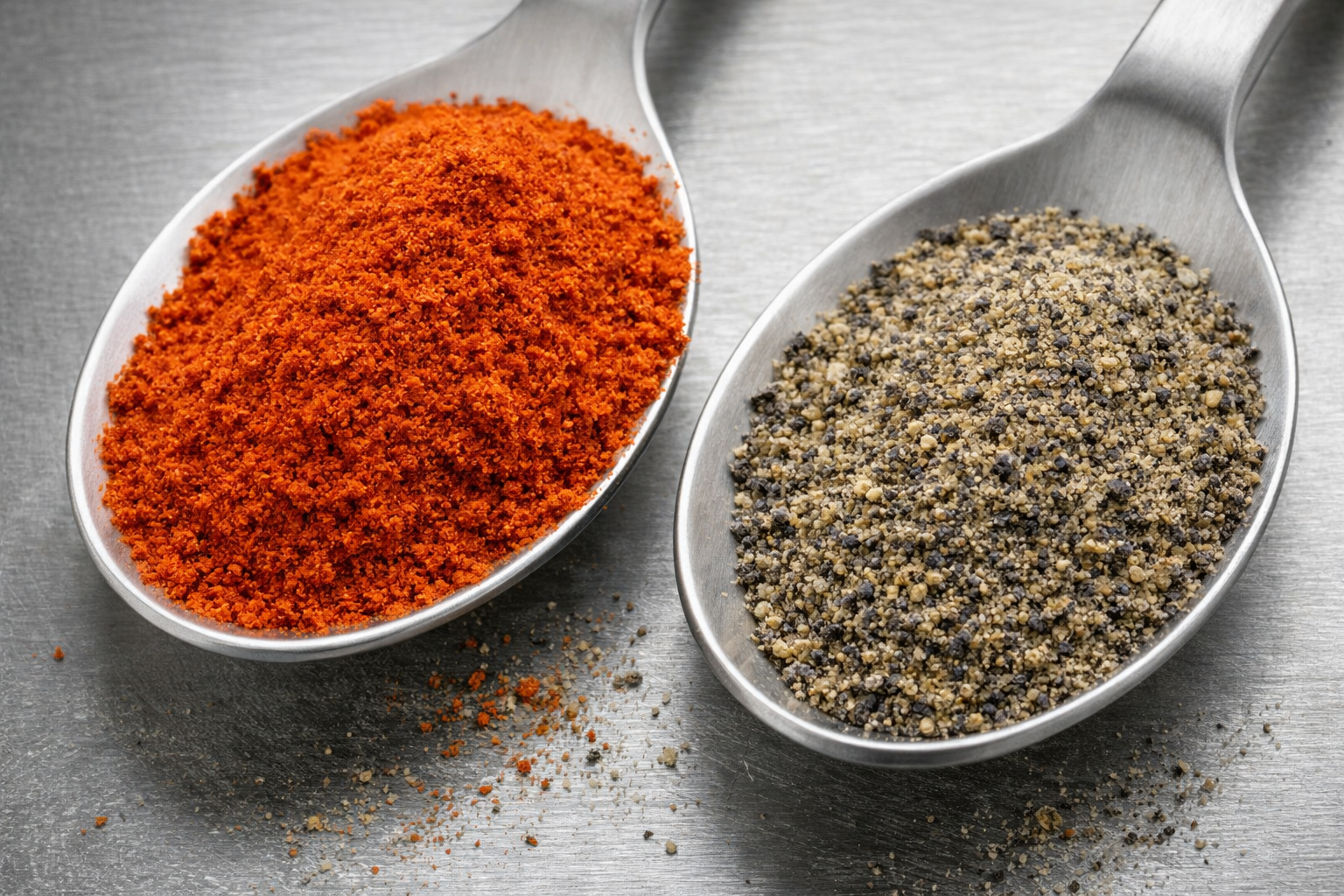
Particle size is one of the most underestimated variables in spice sourcing. While two ingredients may be labeled the same, their grind, or mesh size, can significantly impact how they disperse, hydrate, or integrate into a formulation.
A finer grind may provide better coverage and color distribution, while a coarser cut can influence texture or release of flavor over time. Inconsistent particle size can result in uneven mixing, visual defects, or flavor imbalances across batches.
For manufacturers, this is not just about preference, it is about control.
Moisture Content and Its Hidden Impact
Moisture levels are often overlooked unless they become a problem. However, even small variations can affect shelf life, flowability, and stability during storage.
Higher moisture content may increase the risk of clumping or microbial growth, while excessively low levels can alter how an ingredient behaves in certain applications.
Maintaining consistent moisture specifications is essential for ensuring that ingredients perform reliably under different environmental and processing conditions.
Color Is More Than Appearance
Color is frequently treated as a visual attribute, but in many applications, it is also an indicator of quality and processing conditions.
Standards such as ASTA color values are used to measure intensity and consistency, particularly in spices like paprika or chili. Variations in color can affect not only the final appearance of a product, but also how it is perceived by the end consumer.
Inconsistent color across batches can lead to reformulation adjustments, added costs, and delays in production timelines.
Volatile Compounds and Flavor Integrity
The strength and profile of a spice are closely tied to its volatile oils. These compounds are responsible for aroma and flavor, and they can vary depending on factors such as origin, processing, and storage.
Without consistent control of these elements, the same ingredient can deliver noticeably different results from one batch to another. For manufacturers, this creates challenges in maintaining a stable and recognizable product profile.
Looking Beyond the Obvious
Focusing only on price or availability can simplify the purchasing process, but it often shifts complexity downstream into production.
By paying closer attention to specifications such as particle size, moisture content, color, and oil levels, buyers can reduce variability, improve efficiency, and protect product integrity.
In the end, the difference between a smooth operation and a reactive one often comes down to details that are easy to overlook, but impossible to ignore once they start affecting performance.
Operational Considerations
The Unseen Variables Matter
Technical specifications are not secondary, they directly influence how ingredients behave in real applications.
Consistency Is Built, Not Assumed
Reliable performance comes from controlling multiple variables, not just sourcing the same ingredient name.
Upstream Decisions Shape Downstream Results
What is overlooked during purchasing often reappears during production—usually at a higher cost.
The Cost of Overlooking the Details
In a market where efficiency and consistency are critical, understanding the finer details of ingredient specifications is no longer optional.
The more precise the input, the more predictable the outcome, and in food manufacturing, predictability is everything.