Most cinnamon reaches a finished food product as a familiar brown powder.
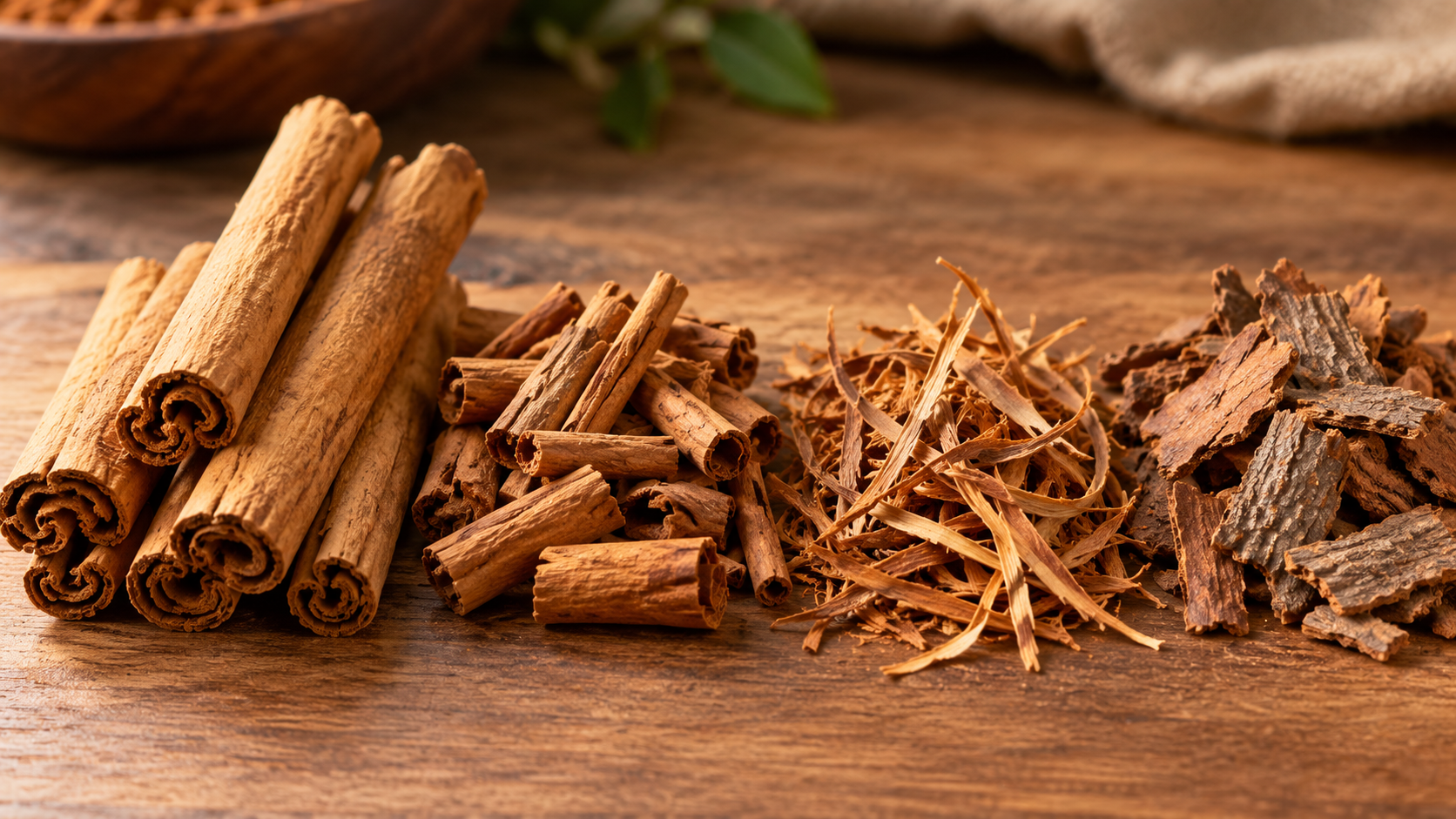
But long before it reaches a grinder, cinnamon can move through trade in several very different forms.
In the Ceylon cinnamon industry, terms such as quills, quillings, featherings, and chips describe more than appearance. They reflect which part of the processed bark is being sold and what happened to it after harvest.
For buyers working with whole cinnamon or raw material intended for further processing, those distinctions can affect how the ingredient is specified, handled and ultimately used.
Cinnamon Starts With Bark
Ceylon cinnamon comes from the inner bark of Cinnamomum verum, historically also referred to as Cinnamomum zeylanicum.
After mature shoots are harvested, the outer bark is removed and the inner bark is carefully separated from the stem.
The thin pieces of inner bark naturally curl as they dry. Skilled processors layer and join these pieces together to create the long cylindrical form associated with Ceylon cinnamon.
That finished structure is the quill.
But not every piece of bark becomes a complete quill.
Processing also produces smaller pieces and other bark material that are separated into different commercial forms.
Quills: The Most Recognizable Form
Quills are the long, rolled tubes most people associate with Ceylon cinnamon.
They are formed from thin pieces of peeled inner bark that are overlapped, filled with smaller pieces of the same cinnamon bark and dried together.
In Sri Lanka, quills are traditionally produced at approximately 42 inches, or 105 centimeters, before they may be cut into shorter lengths for sale.
Quills can also be classified into commercial grades based on characteristics such as diameter, appearance and the amount of surface discoloration known as foxing.
Names such as Alba, Continental, Mexican and Hamburg refer to established grade families within the Ceylon cinnamon trade.
That means two descriptions can apply to the same material:
Quill describes the commercial form.
Alba or C5, for example, describes a grade within that form.
Those terms should not be treated as interchangeable.
Quillings: Pieces of Finished Quills
Quillings are pieces of cinnamon quills that have broken during handling, cutting, packing or processing.
Sri Lanka's Department of Cinnamon Development defines quillings as pieces of whole quills measuring less than 200 millimeters in length.
The key distinction is their origin.
Quillings began as material suitable for quill production. They are essentially broken sections of that finished form rather than a separate part of the tree.
For industrial users, quillings can make sense when the visual presentation of a complete cinnamon stick is unnecessary and the material will later be extracted, infused or processed further.
Featherings: Smaller Pieces From Quill Production
Featherings come from the smaller pieces of inner bark generated while cinnamon quills are being prepared.
They are finer and less uniform than quillings.
Unlike quillings, which originate from broken finished quills, featherings are associated with the smaller fragments separated during peeling and quill preparation.
That difference may sound minor, but commercially it helps identify what type of bark material a buyer is receiving.
Featherings can be used as raw material for further processing, including grinding and extraction, where the appearance of a complete quill is not required.
Chips Are Different
Cinnamon chips are sometimes described simply as small pieces of cinnamon bark.
That misses an important distinction.
In recognized Ceylon cinnamon standards, chips consist of mature bark that cannot be peeled in the same way as the thin inner bark used to make quills. This material can retain portions of the outer bark and is separated through scraping or beating.
So chips are not simply quills chopped into smaller pieces.
Their structure and composition are different.
That can influence the raw material selected for processes such as grinding or extraction and is one reason a buyer should not assume that every broken form of cinnamon represents the same quality or bark composition.
Why These Terms Matter in Commercial Buying
If cinnamon will ultimately be ground, it might seem unnecessary to care whether the starting material is a quill, quilling, feathering or chip.
But the name of the form tells the buyer something about what material entered the process.
A specification may therefore need to distinguish between:
• Botanical type or species
• Country of origin
• Commercial form
• Quill grade, when applicable
• Moisture requirements
• Volatile oil requirements
• Extraneous matter limits
• Treatment
• Microbiological requirements
• Intended processing or application
This becomes especially relevant when comparing supplier quotes.
Two offers may both say Ceylon cinnamon, while one refers to quillings and another refers to chips. They are not automatically equivalent raw materials simply because they come from the same botanical source.
Whole Cinnamon Is a Commercial Category Too
International cinnamon standards do not use “whole” only to mean an intact cinnamon stick.
Under ISO terminology, whole cinnamon can include the commercial forms of cinnamon other than ground powder.
That distinction matters when specifications, customs documents or supplier descriptions use terms differently from consumer packaging.
A buyer requesting “whole cinnamon” may therefore need to be more specific about the actual format required.
Selecting the Form Around the Process
The correct form depends on what will happen next.
A manufacturer producing a visible whole spice product may require properly graded quills.
An extraction operation may not need the appearance or uniformity associated with premium quills.
A manufacturer planning to grind cinnamon may evaluate other commercial forms depending on its quality requirements, processing capabilities and finished specification.
The purchasing question is therefore more precise than:
“Do we need cinnamon?”
It becomes:
Which cinnamon, in which commercial form, under which specification, for what process?
Quills, quillings, featherings and chips all originate from cinnamon bark, but they represent different material within the commercial cinnamon supply chain.
Knowing exactly which one is being quoted helps procurement, quality and production teams compare the ingredient they are actually buying rather than relying on the word “cinnamon” alone.
References
Department of Cinnamon Development, Sri Lanka. (n.d.). Post harvest technology: Cinnamon products and commercial grades.
International Organization for Standardization. (2014). ISO 6539:2014: Cinnamon (Cinnamomum zeylanicum Blume) specification. ISO.