
Nutmeg and mace look, taste, and function like two different spices.
Botanically, they come from the same fruit.
Both are produced by Myristica fragrans, a tropical evergreen native to Indonesia’s Moluccas, including the Banda Islands, which have been closely associated with nutmeg production for centuries.
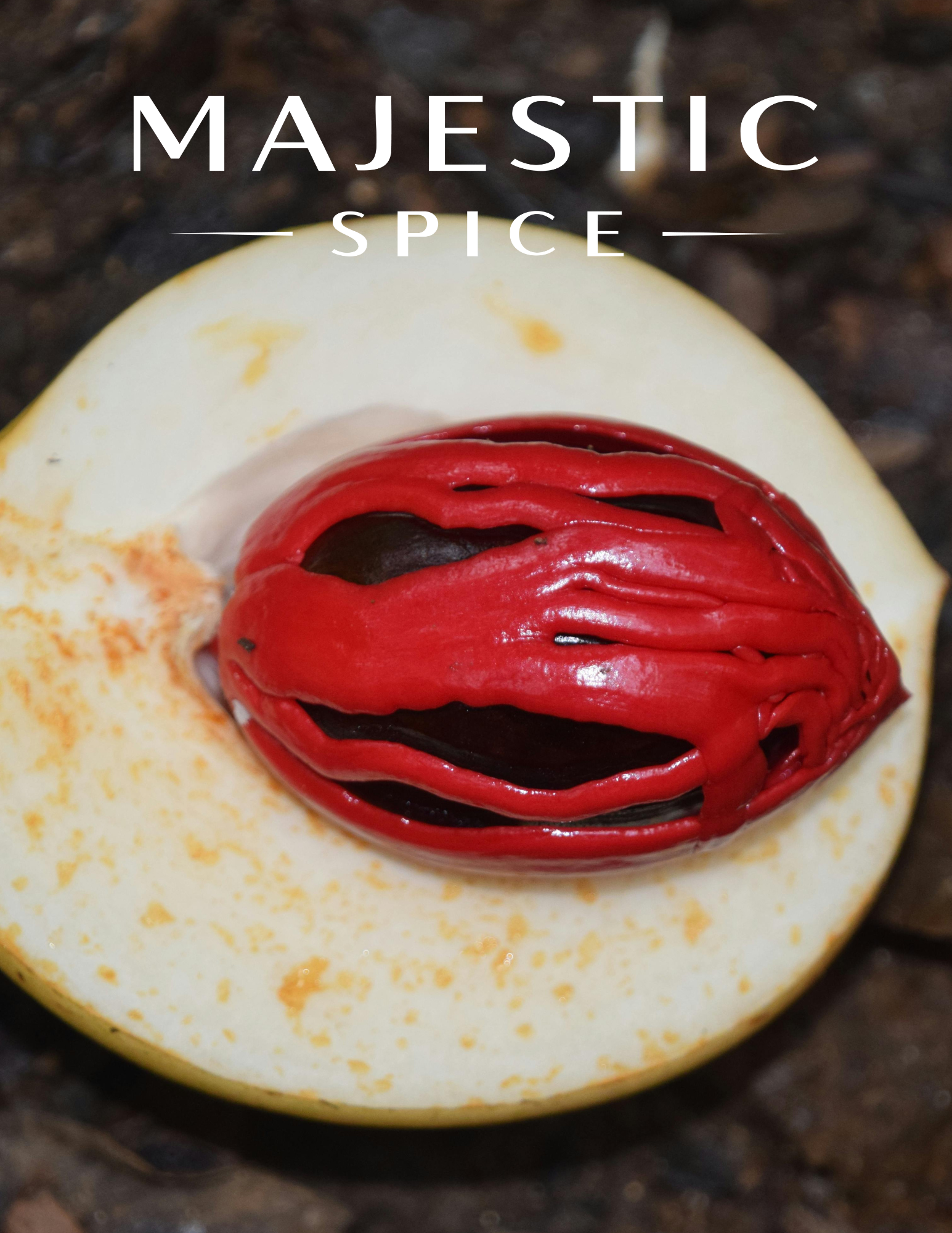
When the fruit ripens, it splits open and reveals something unusual: a dark seed wrapped in a bright red, lace-like covering.
That single fruit produces two commercial spices.
Nutmeg comes from the seed.
Mace comes from the aril, the thin covering that surrounds it.
The difference sounds simple. What happens after harvest is what turns them into two distinct ingredients.
From Fruit to Two Spices
Once the fruit opens, the aril is separated from the seed.
The aril is dried and gradually changes from bright red to an orange, amber, or yellowish color. This becomes mace.
The seed follows a different process. It is dried separately, and the outer shell is removed to reveal the nutmeg inside.
So although both spices begin inside the same fruit, they are separated early and processed as different ingredients from that point forward.
That difference in plant structure and processing contributes to the sensory characteristics each one develops.
Nutmeg and Mace Do Not Taste the Same
Nutmeg is generally warmer, fuller, and more rounded.
Its profile can include sweet, woody, earthy, and slightly pungent notes. It is used across bakery, dairy, sauces, processed meats, beverages, desserts, and seasoning systems.
Mace belongs to the same general aromatic family, but its profile is typically lighter and more delicate.
It can bring warm, floral, slightly sweet, and peppery notes without exactly reproducing the heavier character of nutmeg.
That makes mace useful when a formulation needs the aromatic direction associated with nutmeg but with a different intensity or sensory balance.
They are related ingredients, not interchangeable versions of the same spice.
One Fruit Does Not Produce Equal Amounts of Each
There is another commercial difference.
Each fruit contains one seed, while the mace is only the relatively thin aril wrapped around it.
That means the usable amount of mace produced from each fruit is much smaller than the nutmeg portion.
This difference in yield is one reason mace is typically produced in lower volumes and can command a higher price than nutmeg.
For procurement teams, that means replacing nutmeg with mace is not simply a flavor decision. Availability, cost, origin, and required usage rate can all change the economics of the formulation.
What Changes in a Formulation?
Choosing between nutmeg and mace depends on what the finished product needs.
A developer may consider:
Flavor intensity
Nutmeg generally delivers a fuller, warmer profile, while mace can provide a more delicate aromatic expression.
Application
Both can work in sweet and savory systems, but the desired flavor balance determines which one fits better.
Appearance
Their color and physical form differ, which can matter in products where visible spice particles or finished-product color are important.
Usage rate
The two spices should not automatically be substituted at the same level simply because they come from the same plant.
Cost and availability
The smaller amount of mace produced per fruit can affect pricing and supply compared with nutmeg.
These differences are especially relevant when a formulation is being scaled or when one ingredient is being considered as a substitute for the other.
What Buyers May See on a Specification
Nutmeg and mace may be supplied whole, broken, or ground depending on the application.
Commercial specifications can include characteristics such as:
- Moisture
- Volatile oil
- Ash
- Particle size when ground
- Physical cleanliness
- Microbiological requirements
- Treatment
- Country of origin
A name on a specification therefore tells only part of the story.
A ground nutmeg and a ground mace may share the same botanical source, but they are still different raw materials with different sensory, physical, and commercial characteristics.
One Fruit, Two Ingredients
The relationship between nutmeg and mace is unusual because the same fruit creates two separate spices at the same harvest.
But once the seed and aril are separated, they follow different processing paths and enter food manufacturing as distinct ingredients.
For formulation work, the practical question is not simply whether nutmeg and mace are related.
It is which profile, format, intensity, and cost structure better fits the finished product.