
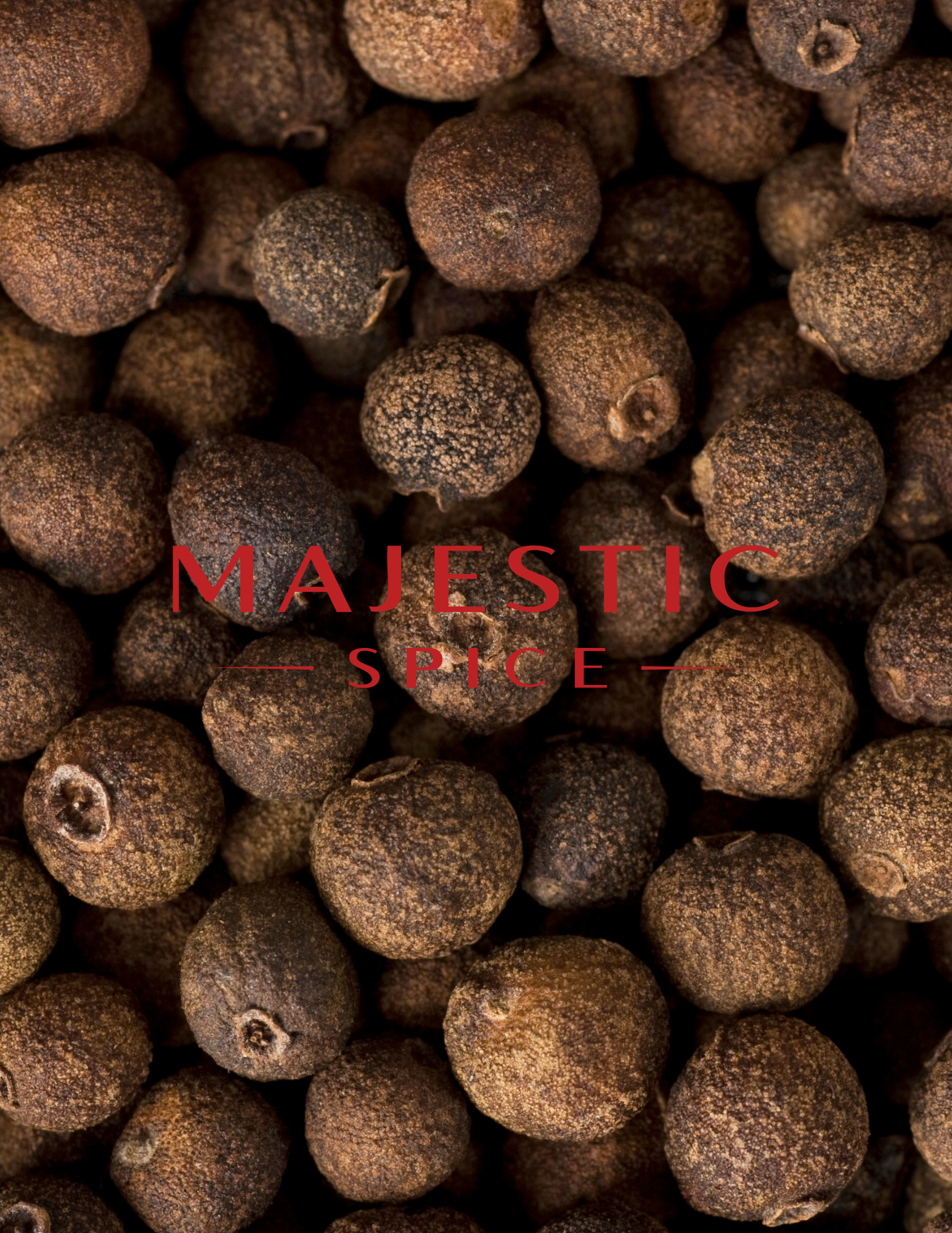
Allspice has a name that makes it sound like a seasoning blend.
It isn’t.
Allspice comes from the fruit of Pimenta dioica, an evergreen tree native to parts of the Caribbean, Mexico, and Central America. The berry develops an aroma that can remind people of clove, cinnamon, nutmeg, and pepper, which helps explain how the English name “allspice” came about.
It is also sometimes called pimento or Jamaican pepper, reflecting the ingredient’s long connection with Caribbean trade and cuisine.
But the name is only one interesting part of the story.
The Berry Is Harvested Before It Fully Ripens
Commercial allspice is made from berries that are harvested while they are still green and immature.
After harvest, the berries are dried until they develop the brown color and concentrated aroma associated with the finished spice.
Agricultural references, including USDA material, describe allspice as the dried unripe fruit of Pimenta dioica.
That harvest timing matters because the aromatic profile of the fruit changes as it matures. For food manufacturers, the finished spice is therefore the result of both the plant itself and the decisions made during harvest and processing.
Allspice may then be sold whole, broken, or ground depending on how it will be used.
Why Does One Berry Smell Like Several Spices?
Part of the answer comes from its natural aromatic compounds.
One of the most important is eugenol, a compound strongly associated with the aroma of cloves. Research on allspice essential oil has identified eugenol as one of its major components, which helps explain why clove is often one of the first notes people recognize.
But allspice should not be treated as a substitute for simply combining clove, cinnamon, nutmeg, and pepper.
It has its own aromatic balance.
For R&D teams, that distinction is useful. A single ingredient can contribute several familiar flavor impressions, but it will not behave exactly like a blend made from those individual spices.
How Is Allspice Evaluated Commercially?
For an industrial buyer, aroma is only part of the picture.
Commercial specifications may also evaluate characteristics such as:
- Moisture
- Volatile oil
- Total ash
- Acid-insoluble ash
- Cleanliness
- Physical form
International standards such as Codex include allspice among dried fruit and berry spices and recognize whole, broken, and ground forms.
Codex also establishes measurable parameters for the ingredient, including limits for moisture and minimum volatile oil levels. These types of specifications help buyers evaluate whether a product meets the quality requirements expected for commercial use.
The important point is that two products both labeled “allspice” are not automatically identical.
Their aromatic strength, physical form, cleanliness, treatment, microbiological requirements, and supplier specifications may differ.
Why Volatile Oil Matters
Volatile oil is especially relevant when evaluating aromatic spices.
These oils contain many of the compounds responsible for the characteristic aroma of the ingredient. In allspice, this includes the compounds behind its warm, clove-like profile.
A higher or lower volatile oil level does not tell the entire story of ingredient quality, but it can provide useful information about aromatic strength when considered alongside the rest of the specification.
For procurement and R&D teams, that gives another way to evaluate an ingredient beyond appearance alone.
Whole vs. Ground Allspice
The form of the ingredient also affects how it can be used.
Whole berries are useful in applications where flavor is extracted gradually, while ground allspice can be incorporated more evenly into seasoning systems and finished products.
Commercial applications can include:
- Meat and poultry seasonings
- Sausages
- Marinades
- Sauces
- Pickling systems
- Bakery products
- Desserts
- Dry seasoning blends
For formulators, the decision is therefore not simply whether allspice belongs in the product.
The questions may also include how much aromatic intensity is needed, what physical format works best, how the ingredient interacts with the rest of the seasoning system, and what specification is appropriate for the final application.
One Ingredient With More Behind It Than the Name Suggests
Allspice is easy to describe as “the spice that tastes like several spices.”
But there is much more happening behind that description.
It is a berry harvested before full maturity, dried into a commercial spice, evaluated using measurable quality characteristics, and used in very different food applications depending on its form and specification.